Leave Your Message

10 Tips for Buying Acoustic Sound Panels

A room can look finished and still sound uncomfortable. Voices may bounce across bare walls, meetings can feel tiring, and music may lose its detail. Acoustic Sound Panels can help reduce reflections, but they do not block every sound or replace proper soundproofing. That distinction matters. The right choice depends on the room, the noise you notice, and how the space is used.

Before buying, consider more than color and price. Panel thickness, core material, fabric, placement, and coverage all affect performance. A small sample may look perfect online yet clash with your lighting or wall finish. Measure the room, note hard surfaces, and listen from the places where sound matters most. A home office, classroom, and recording room rarely need the same setup. There is no universal fix.

This guide shares ten practical tips for comparing options and avoiding common buying mistakes. It will help you check product specifications, estimate how many panels you may need, and think through safe, suitable installation. Treat performance claims carefully, and look for clear test information from the manufacturer. If the room has persistent noise from outside or between rooms, panels alone may disappoint. Sound can be stubborn. A thoughtful choice starts with understanding what you want to improve, then matching the product to that real-world need.
10 Tips for Buying Acoustic Sound Panels

Define the Acoustic Problems You Need to Solve

Before buying acoustic panels, identify what sounds wrong in the room. A sharp hand clap that lingers suggests excessive reverberation. Speech that feels muddy may point to reflections from bare walls, a hard floor, or a glass table. Stand where people usually sit and listen during normal use. A room can sound fine when empty, then become tiring during a meeting.

Try a simple check. Record a short voice memo from the problem spot, or ask someone to speak while you move around. Note whether the issue is echo, uneven sound, or noise traveling between rooms. Panels can reduce reflections inside a room, but they do not usually block sound from entering or leaving it. That distinction matters. I once focused on the loudest corner and missed how much a large window shaped the sound. Not perfect.

Mark the wall areas facing the speaker or listening position, and notice nearby reflective surfaces. A few carefully placed panels may help more than covering every wall. If possible, test with temporary soft furnishings before ordering. Results depend on room size, panel thickness, placement, and the materials already present. Keep notes on what changes. Your first diagnosis may be wrong, and that is useful information.
Assess Your Room’s Size, Surfaces, and Sound Sources

Before buying panels, measure the room’s length, width, and ceiling height. Note bare walls, glass, tile, and large furniture. A 12-by-15-foot room with a low ceiling behaves differently from a tall, narrow space. Hard surfaces often create distinct flutter echoes; clap once near a wall and listen for a sharp repeat. The ASTM C423 test method reports sound absorption by frequency. Its Noise Reduction Coefficient averages results at 250, 500, 1,000, and 2,000 Hz, so check the full frequency data when available—not just one rating.

Tip: Map the sound. Mark where speech, speakers, computers, or HVAC noise originate, then identify the first surfaces sound reaches. If voices sound harsh at a desk, panels at nearby reflection points may help more than covering every wall. A rug can reduce floor reflections, but it will not treat a strong ceiling reflection.

One easy mistake is treating every room echo as the same problem. Low-frequency bass may remain even after thin panels soften speech, and absorption does not block sound from entering or leaving a room. Compare panel test data with your main sound sources, and leave some surfaces untreated if the room already feels dull. I would recheck the space after installation; room use and furniture can change what needs attention.

Compare Panel Materials, Thickness, and Performance Ratings

When comparing acoustic sound panels, look beyond color and price. Fiberglass and mineral-wool panels often absorb a broad range of frequencies, while polyester options can be lighter and easier to handle. Foam may reduce sharp echoes, but its performance varies with density and shape. Check the product’s fire and safety documentation before installing it, especially in shared or public rooms. Small details matter.

Thickness affects what a panel can absorb. A thin panel may help tame high-frequency reflections from clapping or conversation, yet do little for low, boomy notes. Thicker panels generally absorb lower frequencies more effectively; leaving an air gap behind a panel can also improve absorption. In a home office, a few thick panels at reflection points may make speech clearer without covering every wall. More coverage is not always better.

Compare performance ratings carefully. The Noise Reduction Coefficient, or NRC, is a useful average, but it does not show how a panel performs at every frequency. Ask for test results by frequency band and note the mounting method used in the test. A rating measured with an air gap may not match a panel mounted flat against your wall. There is no perfect rating. I’d compare the test setup with your room, then treat any single number as a starting point, not a promise.

Plan Panel Quantity, Placement, and Mounting Requirements

Plan quantity before ordering. Measure the room’s length, width, and height, then note hard surfaces, furniture, and the listening or speaking area. A useful estimate comes from the Sabine equation, cited in the ASHRAE Handbook: reverberation time equals 0.161 times room volume divided by total sound absorption. For a 54 m³ room, reducing an estimated reverberation time from 1.2 to 0.6 seconds calls for about 7.2 m² sabins of added absorption. Treat this as a planning estimate, not a promise; actual results depend on frequencies, furnishings, and installation.

Tips: Check the panel’s tested absorption data before calculating quantities. ASTM C423 defines the reverberation-room test commonly used to report the Noise Reduction Coefficient (NRC), an average across 250, 500, 1,000, and 2,000 Hz. That average can hide weaker low-frequency performance. Measure twice. Buy a small sample if the room has a persistent bass boom.

Place panels where sound reflects between people and hard surfaces: often on side walls near seated ear height, and on the wall behind speakers or a presenter. Spread coverage across useful reflection points rather than clustering every panel in one corner. Leave room. Before mounting, check wall construction, panel weight, and the fixing method. An air gap can improve absorption at some frequencies, but it needs secure, suitable hardware. Keep access to outlets and vents. A neat grid may look right and still miss the room’s worst reflection point.

Evaluate Safety, Durability, Appearance, and Total Cost

Safety deserves more attention than color charts. Check the panel’s fire-performance documentation and installation instructions before buying. Materials and ratings differ, so do not assume that a product is suitable for every room. Consider indoor-air emissions, especially in a small office or bedroom. Ask for clear product details if they are missing. That matters.

Durability depends on the core, fabric, and how the panels will be used. In a busy hallway, a tightly woven, cleanable surface may hold up better than a delicate fabric. Check whether edges fray and whether the covering can be wiped without staining. Also inspect the mounting method. A panel that feels light in your hands still needs suitable anchors for your wall. I once underestimated the hassle of mounting several panels evenly; a paper template would have saved time.

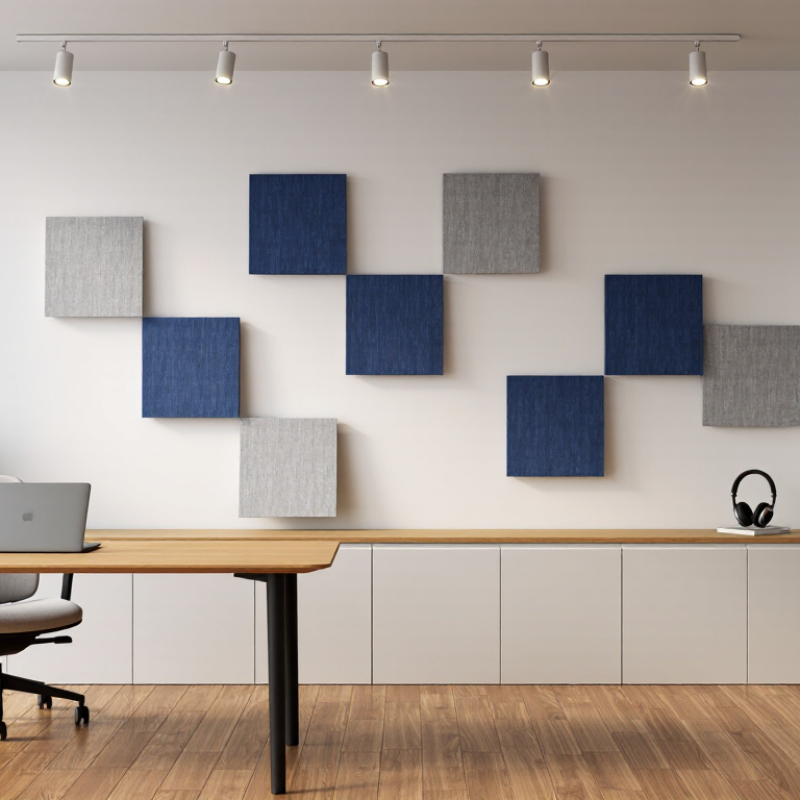
Appearance should fit the room after installation, not just in a sample photo. View fabric swatches beside your actual wall and under evening lighting. For total cost, include mounting hardware, delivery, installation, and possible replacement—not only the price per panel. A cheaper option can cost more if it needs extra labor or wears quickly. Keep a little budget for mistakes. Even careful measurements can be off.