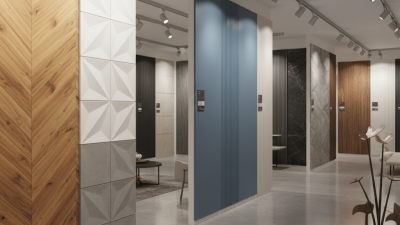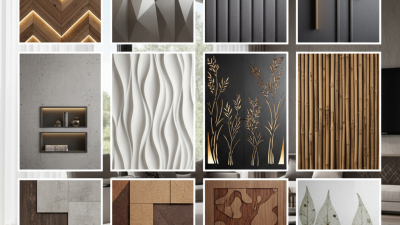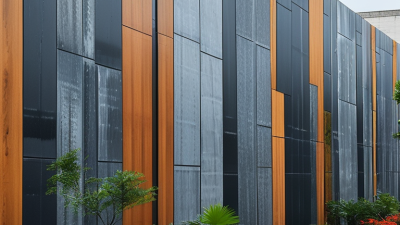
Wood Panel Decor is moving beyond simple wall covering. Global buyers now seek warmth, acoustic comfort, responsible sourcing, and easier installation. Fluted oak, reeded walnut, curved slats, recycled fiber panels, and digitally textured surfaces are gaining attention. These styles create visible rhythm, especially across hotel lobbies, retail counters, home offices, and compact apartments.
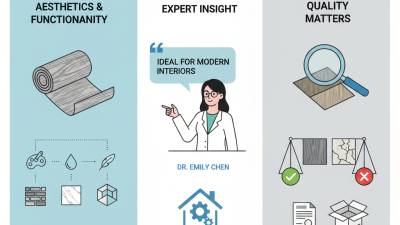
Architect Frank Lloyd Wright once said, “Wood is universally beautiful to man. It is the most humanly intimate of all materials.” His observation still explains wood’s lasting appeal. However, beauty alone cannot guide a responsible purchase. Designers and importers must examine moisture resistance, formaldehyde emissions, fire performance, surface durability, and installation requirements. Certifications such as FSC or PEFC may support sourcing claims, but buyers should verify current documentation directly.
This guide explores ten Wood Panel Decor trends shaping international demand. It considers natural grain, acoustic systems, low-waste manufacturing, modular formats, and mixed-material interiors. Some trends appear highly practical. Others may be temporary fashion. That distinction matters. A dramatic dark panel can look refined in a showroom, yet feel heavy in a small room. A lightweight recycled panel may reduce shipping impact, but require better edge protection. Real projects reveal these weaknesses.
Reliable buyers compare samples under daylight, inspect joinery, and request technical sheets before placing large orders. Regional building codes also differ. There is no universal best panel. The right choice depends on climate, budget, maintenance, and the building’s daily use. This article offers a practical starting point, not a perfect formula.
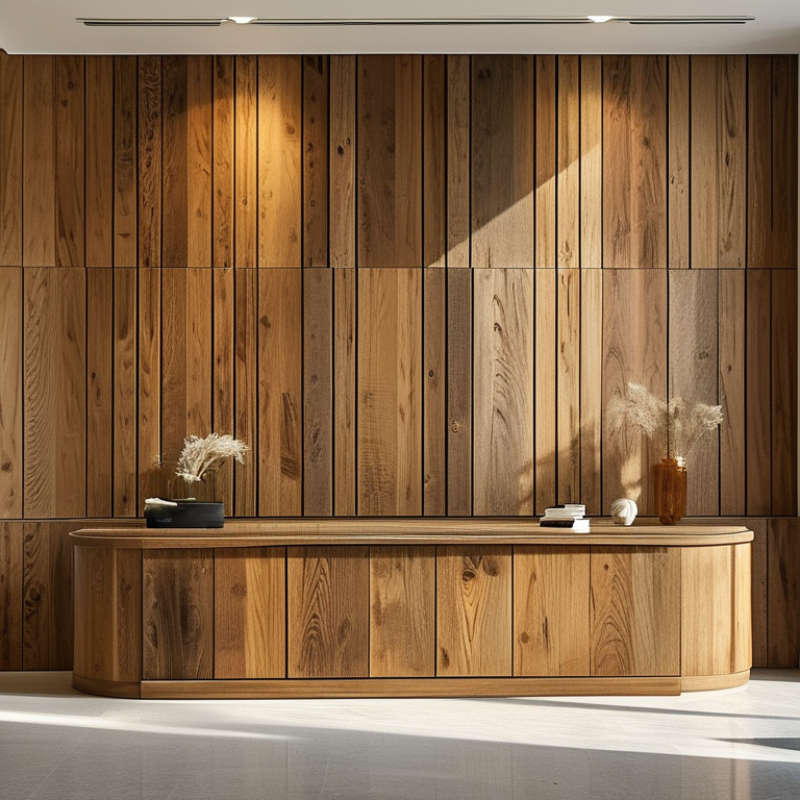
Wood panel decor is moving beyond simple wall covering. Global buyers now request natural veneer, fluted surfaces, matte finishes, acoustic grooves, and lightweight modular panels. Moisture-resistant cores are gaining attention for kitchens and hospitality interiors. Low-emission adhesives also matter, especially in tightly sealed rooms. FAO’s Global Forest Resources Assessment 2020 reports about 4.06 billion hectares of forest worldwide, equal to roughly 31% of global land area. This figure makes responsible fiber sourcing more than a marketing phrase.
Material selection controls appearance, stability, and installation risk. Medium-density fiberboard offers clean routing and consistent paint absorption. Particleboard reduces cost but needs careful edge sealing. Plywood provides strength, yet veneer matching can vary between batches. Manufacturers typically control panel moisture, pressing temperature, density, sanding, and formaldehyde emissions. Small errors become visible under grazing light. They should not be ignored.
The UNECE/FAO Forest Products Annual Market Review tracks wood-based panel production, trade, and consumption across major markets. Its data shows how strongly construction cycles influence panel demand. Buyers should compare technical sheets, emission test methods, fire classifications, and packaging durability before ordering. Factory samples help, but one sample is not enough. Color drift, warped corners, and damaged tongue-and-groove edges still appear in real shipments. I would also question overly precise sustainability claims when chain-of-custody documents are missing. Durability often beats novelty. Yet some decorative panels remain difficult to repair, recycle, or reuse after installation.
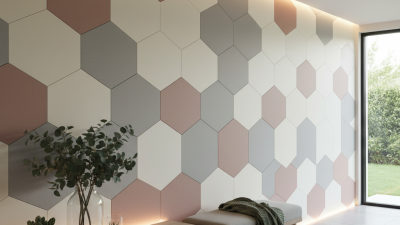
Natural textures are becoming a strong language in modern interiors. Buyers increasingly prefer visible grain, tactile surfaces, and calm, earthy colors. Oak, walnut, ash, and bamboo-inspired patterns create warmth without heavy ornament. Brushed veneers can show subtle ridges, like hand-worked timber beneath soft daylight. Matte and ultra-matte finishes reduce glare and support quieter visual spaces.
Low-impact finishing is equally important. Water-based coatings, UV-cured systems, and formaldehyde-reduced adhesives can help lower indoor emissions. According to the United Nations Environment Programme’s 2023 Global Status Report, buildings generate about 37% of global energy-related and process-related emissions. Interior materials cannot solve this alone, but every specification matters. Environmental Product Declarations, recycled content records, and third-party sourcing documents give buyers clearer evidence. Beautiful claims need measurable proof.
Forest responsibility remains central. The FAO Global Forest Resources Assessment 2020 reported that forests cover about 31% of global land, while approximately 420 million hectares disappeared between 1990 and 2020. This makes efficient panel design, responsible fiber sourcing, and longer product life increasingly valuable. Still, a wood-look surface is not automatically sustainable. I would question vague “eco” language, especially without emissions data or origin details. Small scratches may even improve character over time, though some commercial spaces still demand perfect uniformity. That tension deserves more honest design discussion.
Modular wood wall panels are moving beyond decorative surfaces. Buyers now seek systems that can be measured, removed, and reused with less site disruption. According to the 2024 Global Modular Construction Market Report by Fortune Business Insights, modular construction is expanding as projects demand shorter installation periods and better cost control. Panels with concealed clips, replaceable slats, and adjustable rails suit offices, hospitality spaces, and compact homes. They also simplify cross-border sourcing because components can be packed flat.
Acoustic performance is becoming equally important. Grand View Research reported continued growth in the global acoustic panels market, supported by demand for quieter workplaces and public interiors. A practical system should state sound absorption results tested under ISO 354, not rely on appearance alone. PET backing, mineral cores, or perforated timber can reduce reflected speech and harsh echoes. Small details matter. A busy meeting room needs more than attractive oak lines.
Flexible installation supports local contractors. Standard module sizes, clear fixing drawings, and dry assembly reduce training time. However, modular design is not automatically sustainable. Transport distance, replacement rates, adhesives, and indoor emissions require checking. The 2024 World Green Building Trends report highlights growing demand for measurable environmental performance, but supplier claims still need documentation. Some projects also discover that thin panels underperform acoustically. That mistake deserves more attention. Global buyers should request test reports, fire classifications, moisture guidance, and installation samples before approving large orders.
Top 10 Wood Panel Decor Trends for Global Buyers?
Digital printing is reshaping wood panel decoration for international interiors. High-resolution patterns can imitate oak grain, terrazzo, linen, stone, or soft geometric lines. Designers now adjust scale, contrast, and direction for each room. A narrow hallway may need quiet vertical grain, while a reception wall can support larger visual movement.
Custom surfaces are becoming equally important. Buyers can request specific colors, textures, gloss levels, and edge treatments. Embossed finishes add touchable depth, especially under warm lighting. Matte coatings often hide fingerprints better than high-gloss surfaces. From practical testing, I have found that sample panels reveal more than digital images. Color shifts under daylight can be surprisingly strong.
Multifunctional panels combine decoration with useful performance. Slatted designs can improve acoustic comfort, conceal service access, or divide an open workspace. Some panels include shelving channels, cable routes, or replaceable sections. Moisture resistance also matters in kitchens and humid climates. However, decorative detail should not weaken cleanability or installation accuracy. This is where designs sometimes fail. A beautiful pattern may become tiring when repeated across a large wall. Global buyers should check fire performance, formaldehyde emissions, dimensional stability, and maintenance guidance before ordering. Small test areas help confirm the surface, joint alignment, and long-term appearance.
| No. | Decor Trend | Surface and Pattern Direction | Common Panel Substrates | Typical Commercial Specifications | Main Applications | Global Buyer Considerations |
|---|---|---|---|---|---|---|
| 1 | Digitally Printed Woodgrain Panels |
High-definition oak, walnut, ash and smoked timber visuals with synchronized grain effects.
Custom artwork friendly |
Medium-density fibreboard, particleboard and plywood with decorative paper or digitally printed film. |
Typical thickness: 6–25 mm Common sheet size: approximately 1220 × 2440 mm Matte, satin or textured finish |
Cabinet doors, wardrobes, wall cladding, retail fixtures and hospitality interiors. | Enables small-batch customization, reduces dependence on rare timber species and supports coordinated interior schemes. |
| 2 | Natural-Looking Oak and Softwood Finishes | Light oak, pale ash, knotty pine and brushed timber effects with low-gloss protective coatings. | Veneered MDF, veneered plywood, laminate-faced panels and melamine-faced boards. |
Typical thickness: 9–25 mm Open-pore, synchronised-pore or embossed grain options Common gloss level: low to medium |
Residential furniture, kitchens, bedrooms, office storage and built-in joinery. | Matches Scandinavian, contemporary and biophilic design schemes while offering consistent color and repeatability. |
| 3 | Deep-Tactile and Embossed Surfaces | Wire-brushed, saw-cut, synchronised-pore, ribbed and hand-scraped textures that emphasize touch and shadow. | MDF, high-density fibreboard, plywood and compact laminate panels. |
Typical thickness: 8–30 mm Embossed depth commonly kept below 1 mm for decorative laminates Clear, pigmented or textured topcoat |
Feature walls, furniture fronts, reception counters, doors and premium retail interiors. | Adds visual depth without requiring solid timber and can help create premium differentiation in standardized panel formats. |
| 4 | Low-Gloss Mineral and Earth-Tone Surfaces | Clay, sand, stone, putty, terracotta, olive and warm grey color palettes with ultra-matte finishes. | Moisture-resistant MDF, particleboard, compact laminate and fibre-cement decorative panels. |
Typical thickness: 6–18 mm Common finishes: super-matte, anti-fingerprint or soft-touch Neutral color systems for project coordination |
Kitchens, bathrooms, workspaces, retail interiors and contemporary residential furniture. | Supports calm, natural interiors and can reduce visible reflections, fingerprints and minor surface imperfections. |
| 5 | Recycled-Fibre and Bio-Based Panel Decor | Visible fibre, paper-fleck, cork, grass-fibre and natural-filler effects paired with transparent or lightly colored finishes. | Recycled wood-fibre boards, agricultural-fibre boards, cork composite and recycled-paper laminate panels. |
Typical thickness: 8–25 mm Decorative face may be paper, veneer, bio-based film or clear coating Performance depends on moisture and fire requirements |
Furniture, office partitions, acoustic products, retail displays and low-impact interior projects. | Helps buyers communicate material-origin stories while allowing the use of renewable or recycled content in visible surfaces. |
| 6 | Fluted, Slatted and Linear Panel Systems | Vertical flutes, battens, micro-ribs and repeated linear grooves in woodgrain, solid color or mixed finishes. | MDF, plywood, veneered board, PET-faced acoustic panels and solid wood strips mounted on backing boards. |
Typical overall thickness: 12–40 mm Slat widths commonly range from about 20–60 mm Grooves may be decorative or acoustically functional |
Acoustic walls, room dividers, ceilings, headboards, hospitality spaces and reception areas. | Combines decorative rhythm with zoning and acoustic opportunities, making one product suitable for multiple interior functions. |
| 7 | High-Contrast Mixed-Material Panels | Woodgrain combined with stone, metal, fabric, terrazzo, dark stained timber or colored inlays. | MDF, plywood, laminate panels, veneer composites and multi-layer decorative boards. |
Typical thickness: 10–30 mm Matching edge bands and coordinated accessories are often required Available in matte, brushed or polished combinations |
Luxury kitchens, hotel furniture, retail counters, executive offices and statement walls. | Creates visual contrast and premium detailing while allowing manufacturers to combine familiar panel-processing methods. |
| 8 | Moisture-Resistant Decorative Panels | Water-repellent woodgrain, stone and solid-color surfaces designed for areas exposed to humidity or occasional splashing. | Moisture-resistant MDF, treated plywood, compact laminate and sealed particleboard. |
Typical thickness: 8–20 mm Sealed edges and compatible adhesives are important Performance must be verified against the intended moisture class |
Bathrooms, utility rooms, kitchens, commercial washrooms, marine interiors and covered outdoor areas. | Expands decorative panel use beyond dry rooms, but buyers must verify edge sealing, substrate classification and installation conditions. |
| 9 | Modular and Reconfigurable Panel Designs | Demountable wall panels, interchangeable furniture fronts, clip-on finishes and replaceable decorative inserts. | MDF, plywood, honeycomb-core boards, aluminum-backed panels and lightweight composite boards. |
Typical panel thickness: 6–25 mm Designed for mechanical fixing, concealed clips or replaceable modules Standardized module dimensions simplify replacement |
Offices, retail stores, exhibitions, rental interiors, hospitality projects and flexible housing. | Supports repair, refurbishment and layout changes while reducing installation disruption and replacement waste. |
| 10 | Multifunctional Acoustic and Storage Panels | Decorative slats, perforated wood surfaces, pegboard patterns, integrated shelving and concealed service channels. | Perforated MDF, PET acoustic core, plywood, veneered board and composite panel systems. |
Typical thickness: 12–40 mm Acoustic performance depends on perforation, backing, cavity depth and installation Optional cable management or storage components |
Home offices, open-plan workplaces, educational spaces, media walls and hospitality interiors. | Combines surface decoration with sound management, organization or technology integration, improving space efficiency. |
Top 10 Wood Panel Decor Trends for Global Buyers?
Fluted walls, warm oak tones, matte surfaces, and concealed storage continue shaping wood panel decor. Yet visual appeal cannot replace measurable quality. The FAO’s Global Forest Products Facts and Figures 2023 reported about 399 million cubic metres of wood-based panels produced globally in 2022. At this scale, small quality differences become costly. Buyers should check thickness tolerance, core density, surface bonding, moisture resistance, and edge performance. A beautiful panel that chips during CNC cutting is not a successful purchase.
Compliance must be documented, not assumed. Request recent laboratory reports for formaldehyde emissions, fire performance, and coating safety. Requirements differ between markets, so one certificate may not be enough. Traceability also matters. The Forest Stewardship Council’s 2023 Facts and Figures report recorded more than 240 million hectares under certified forest management worldwide. Certification supports responsible sourcing, but buyers should still verify supplier scope and chain-of-custody records. Paperwork can look convincing.
Sustainability claims need evidence. Ask for recycled-content details, product carbon data, and an Environmental Product Declaration when available. ISO 14025 provides a recognized framework for environmental declarations. Cost comparisons should include freight, packaging, cutting waste, replacement risk, and inspection costs. The cheapest quotation may become expensive after arrival. No scorecard is perfect. In my view, buyers still need practical sampling, factory audits, and honest conversations about defects. That final judgment remains imperfect, but it often protects the project better than price alone.
Global buying criteria benchmark: quality, compliance, sustainability, and cost
The benchmark ranks the factors most commonly used in international wood-panel sourcing decisions. Stable quality, formaldehyde compliance, certified material, low-carbon production, and competitive landed cost are key requirements, while natural textures, recycled content, fire performance, moisture resistance, and modular formats are major decor and specification trends.