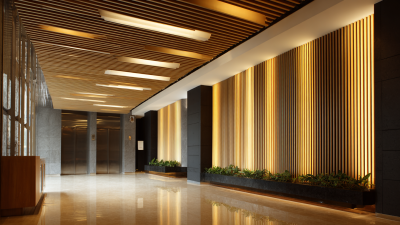
Choosing the right Laminated Wall Panel begins with understanding the space, not chasing the lowest price. Buyers must compare surface durability, moisture resistance, installation method, fire performance, and long-term maintenance. A glossy panel may look impressive under showroom lights, yet reveal fingerprints, scratches, or uneven joints in daily use.
Dr. Joseph Lstiburek, a respected building-science expert, often emphasizes, “A wall is a system, not a single material.” That principle matters when comparing high-pressure laminate, compact laminate, PVC-coated panels, acrylic panels, and decorative veneer systems. High-pressure laminate suits busy corridors, offices, and retail areas because its wear layer resists frequent contact. Compact laminate offers strong moisture performance for washrooms and hospitality interiors. PVC panels are lightweight and easier to clean, although their appearance and heat resistance can vary. Acrylic creates a bright, seamless effect, but scratches may become visible under direct lighting. Veneer panels provide warmth, though they usually require more careful moisture control.
Details decide performance. Check the substrate, edge sealing, adhesive compatibility, panel thickness, and manufacturer testing. Ask for samples. Place them beside window light, warm lighting, and existing flooring. Small differences become obvious there. I have seen buyers focus on color first, then regret weak edge protection later. That mistake is avoidable.
No single panel type wins every project. The best choice balances appearance, impact resistance, humidity exposure, cleaning routines, budget, and installer capability. Product claims still need verification. Review technical data, warranty limits, and independent certifications before approval. A beautiful panel is not automatically a reliable wall system.
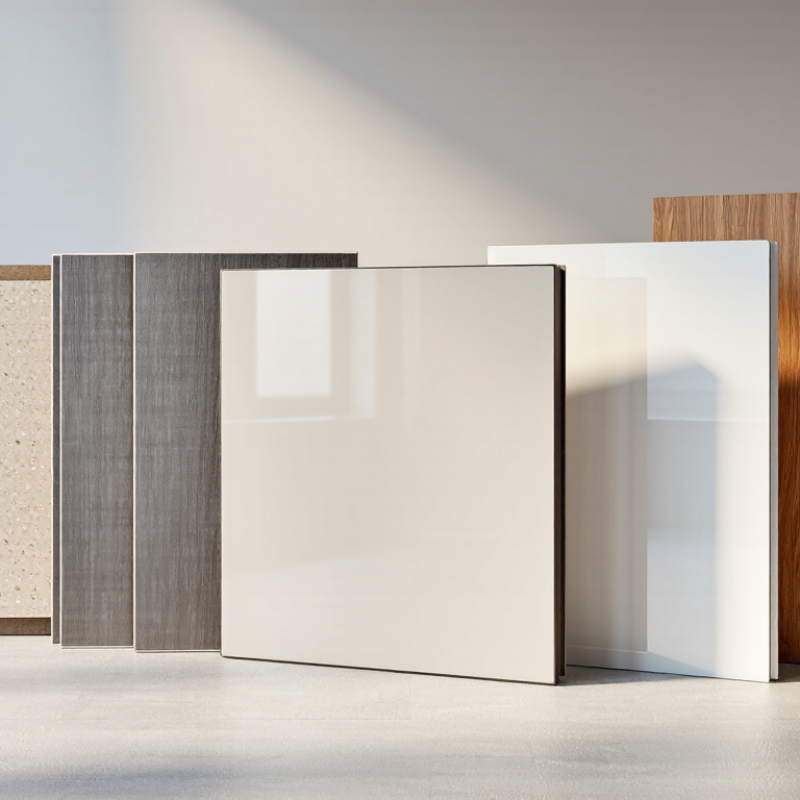
Laminated wall panels are layered boards designed to cover interior walls with a durable decorative surface. Their structure usually includes a substrate, a printed or solid-color laminate, and protective finishing layers. The substrate may be medium-density fiberboard, plywood, particleboard, or a mineral-based board. Each option affects weight, screw holding, moisture resistance, and installation effort.
Buyers commonly classify these panels by core material, surface finish, and intended location. Wood-based panels suit offices, bedrooms, and retail interiors where clean detailing matters. Mineral-core panels offer better dimensional stability in humid areas, although they can be heavier and harder to cut.
Surface classifications include matte, textured, wood-grain, antibacterial, and high-gloss finishes. Glossy surfaces show fingerprints quickly. That matters.
Installation creates another useful category. Tongue-and-groove panels provide aligned joints, while clip-mounted systems allow easier removal for maintenance. Direct-bond panels can produce a seamless appearance, but uneven walls may telegraph through the surface.
In practical site inspections, small wall defects often become more visible after installation. I have seen attractive panels fail because the installer ignored expansion gaps or used unsuitable adhesives.
Product data should confirm fire performance, formaldehyde emissions, cleaning limits, and moisture conditions. Classification is helpful, but it is not perfectly universal. Different suppliers may use the same term for different constructions. Clear specifications and sample testing remain more reliable than appearance alone.
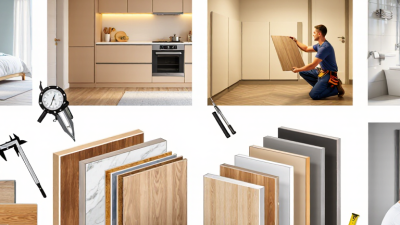
Laminated wall panels are formed from a decorative surface bonded to a stable core. The most common surface material is resin-treated paper. Under heat and pressure, it creates a hard, patterned layer known as high-pressure laminate. This finish resists scratches, stains, and everyday impact. It works well in corridors, offices, kitchens, and retail interiors.
The core changes the panel’s performance. Medium-density fiberboard offers a smooth, economical base for dry rooms. Plywood provides stronger screw holding and better resistance to movement. For damp areas, plastic-based cores can reduce swelling risks. Compact laminate uses multiple resin-impregnated layers without a separate wood core. It is dense, moisture-resistant, and useful for washrooms or busy commercial spaces.
Melamine-faced panels are another practical type. They usually combine decorative paper with a particleboard or fiberboard core. Their clean finish suits bedrooms, offices, and light-use walls, but damaged edges can absorb moisture. A moisture-resistant core is not fully waterproof. That detail is easy to overlook. In project reviews, installers often find that poor joint sealing causes more trouble than the panel material itself. I would also question very low prices; thinner surfaces may look attractive but show wear sooner. Always check core density, fire rating, moisture limits, edge treatment, and installation conditions before buying.
| Panel Type | Decorative Surface | Typical Core or Substrate | Typical Thickness | Main Strengths | Moisture Suitability | Common Applications | Buyer Considerations |
|---|---|---|---|---|---|---|---|
| High-Pressure Laminate (HPL) Panel | Decorative paper impregnated with thermosetting resin and pressed under high pressure | Medium-density fiberboard (MDF), particleboard, plywood, or another stable board | Approximately 6–25 mm, depending on the substrate and construction | Good resistance to abrasion, impact, stains, and everyday cleaning; broad design range | Suitable for dry and moderately humid interiors when edges and joints are properly sealed | Residential interiors, offices, retail spaces, education, hospitality, and healthcare areas | The core is often more moisture-sensitive than the laminate face; specify sealed edges and suitable adhesives |
| Compact Laminate Panel | Multiple resin-impregnated kraft-paper layers with a decorative surface, compressed into a dense solid panel | Solid compact laminate; no separate wood-based core is normally required | Approximately 3–20 mm | High density, strong impact resistance, low water absorption, and good dimensional stability | Very suitable for wet or frequently cleaned interior environments, subject to the product specification | Toilet cubicles, shower partitions, washrooms, laboratories, transport interiors, and high-traffic public areas | Heavier and generally more expensive than substrate-backed panels; mechanical fixing may be preferred |
| Thermally Fused Laminate (TFL) Panel | Decorative melamine-impregnated paper fused directly to the board surface with heat and pressure | Particleboard or MDF | Approximately 6–25 mm | Consistent finish, efficient production, easy cleaning, and usually lower cost than separate HPL bonding | Best for dry interior areas; moisture-resistant board may improve performance but does not make the panel waterproof | Wall cladding, offices, furniture-integrated walls, retail interiors, and residential rooms | Inspect cut edges, joints, and penetrations carefully because exposed wood-based cores can swell |
| PVC or Vinyl-Laminated Panel | Printed PVC film, vinyl sheet, or decorative PVC surface sealed over a rigid panel | PVC foam board, MDF, plywood, or another engineered panel | Approximately 5–20 mm | Lightweight, available in many patterns, easy to wipe clean, and suitable for curved or decorative profiles in some designs | Good surface moisture resistance; the overall rating depends on the core, seams, and installation method | Residential feature walls, hospitality interiors, retail displays, utility areas, and selected wet-room installations | Check fire performance, plasticizer resistance, UV stability, seam detailing, and compatibility with cleaning chemicals |
| Fiberglass-Reinforced Plastic (FRP) Panel | Pigmented or patterned resin surface reinforced with glass fibers | Fiberglass-reinforced polyester or similar resin composite; some systems are bonded to a backing board | Approximately 1.5–5 mm for standard sheets, excluding any backing system | Water-resistant, hygienic, impact-tolerant, and relatively easy to clean | Well suited to high-moisture interiors when seams, corners, and penetrations are correctly sealed | Commercial kitchens, food-processing support areas, healthcare service rooms, washrooms, and maintenance spaces | Texture and appearance are usually more utilitarian; verify chemical resistance and installation requirements |
| Acrylic-Laminated Panel | Decorative acrylic sheet or acrylic-coated surface, often with a high-gloss or glass-like appearance | MDF, particleboard, plywood, or a composite backing | Approximately 6–20 mm | Strong visual depth, vivid colors, smooth cleaning surface, and contemporary appearance | Suitable for interior moisture exposure when the backing and joints are protected | Feature walls, reception areas, retail interiors, kitchens, bathrooms, and hospitality spaces | Glossy finishes may show fingerprints and scratches; confirm UV resistance and edge-banding quality |
| Mineral-Fiber or Cement-Based Laminated Panel | Decorative printed, coated, or resin-laminated surface over a mineral-based board | Cement board, calcium silicate board, magnesium oxide board, or another mineral substrate | Approximately 6–15 mm | Good dimensional stability, non-combustible or improved fire performance in some assemblies, and resistance to humid conditions | Appropriate for humid interiors; performance depends on the exact board, coating, and joint system | Service corridors, commercial interiors, public buildings, utility rooms, and areas requiring robust wall protection | Panels can be heavy and may require stronger framing, specialized cutting tools, and careful dust control |
Decorative laminated wall panels suit offices, retail areas, and hospitality interiors where appearance matters most. Their printed surfaces can imitate oak, stone, concrete, or fabric, while the core provides dimensional stability. However, decorative laminate is not automatically moisture-proof or fire-rated. A practical mistake is judging performance by surface texture alone. Check the technical sheet, core composition, edge treatment, and tested installation method.
Moisture-resistant panels are designed for humid rooms, utility spaces, and areas exposed to occasional splashes. They usually combine a low-absorption core with sealed faces and edges. They are not necessarily waterproof. A damaged joint behind a sink can still absorb water and support hidden deterioration. The U.S. Environmental Protection Agency advises drying wet materials within 24–48 hours to limit mold growth. That detail matters during installation, not only during cleaning.
Fire-rated laminated panels require closer scrutiny. The rating belongs to a tested panel assembly, not always to the decorative board alone. Buyers should review flame-spread, smoke-developed, and fire-resistance results under recognized test methods, such as ASTM E84 or ASTM E119. The National Fire Protection Association reported 1,388,500 U.S. fires in 2023, showing why surface appearance cannot replace verified protection. A qualified specifier should confirm substrate, adhesive, joints, fasteners, and wall construction together. I would also question unusually broad claims, because “fire-resistant” can sound stronger than the actual certification.
How do decorative, moisture-resistant, and fire-rated panels differ?
The chart uses a relative 1–5 scale, where 5 indicates a stronger typical characteristic. Decorative panels generally prioritize visual variety, moisture-resistant panels are designed for damp environments, and fire-rated panels are tested to meet specific fire-performance requirements. Actual performance depends on the product specification, tested wall assembly, installation method, and local building code.
Buyers should compare more than color and price when selecting laminated wall panels. Common options include high-pressure laminate, compact laminate, and PVC-laminated fiberboard. High-pressure laminate usually offers stronger scratch resistance for corridors, retail spaces, and busy kitchens. Compact laminate performs better where moisture may reach the panel edge. PVC-laminated boards can reduce weight and cost, but their substrate needs careful inspection.
Look closely at the core.
Ask for water-absorption, impact, abrasion, and fire-test results. Edge sealing matters because a beautiful surface cannot protect an exposed core. The U.S. Environmental Protection Agency reports that indoor pollutant levels can be two to five times higher than outdoor levels. Therefore, buyers should request VOC emissions data, not vague “eco-friendly” claims. Independent testing under recognized standards gives stronger evidence.
Installation affects the real cost. A panel with hidden fasteners may look cleaner, yet replacement can become slower and more expensive. Check panel thickness, joint tolerance, cleaning chemicals, repair procedures, and spare-panel availability.
Market research from Grand View Research identifies rising demand for decorative wall panels through 2030, but market growth does not prove equal product quality. That is worth remembering.
A low quotation may exclude trims, substrate correction, fire-rated components, or skilled labor. Compare a complete installed system, preferably after inspecting a sample in harsh light and near a wet area. Suppliers may resist this request. Ask anyway.
The right laminated wall panel depends on moisture, impact, cleaning routines, and visual expectations. High-pressure laminate panels suit hotel corridors, offices, and retail interiors. Their dense surface handles frequent contact and offers many decorative finishes. Compact laminate is stronger and more moisture-resistant. It fits washrooms, changing rooms, and laboratory zones. However, its higher cost can be difficult to justify in low-traffic spaces.
For healthcare interiors, hygienic laminate panels with sealed joints are a practical choice. They support repeated cleaning and reduce dirt-trapping gaps. In residential kitchens, moisture-resistant decorative laminate creates a warm, furniture-like finish. PVC-laminated panels work well in utility rooms and budget renovations, but heat and impact limits need careful checking. Grand View Research reported that the global decorative laminates market was valued at approximately USD 7.8 billion in 2022. This growth reflects demand for durable, design-led surfaces. Still, market growth does not prove that every panel suits every room. I would not specify a low-cost panel beside a commercial sink without reviewing its core, edge treatment, and warranty.
Tips: Match the panel to the harshest daily condition, not the average one. Check EN 438 or equivalent performance data before ordering. Request a full-size sample. Small samples can hide texture, glare, and joint visibility. Also verify fire, emissions, and cleaning-test documentation. The U.S. Green Building Council notes that material transparency and low-emitting products can support healthier interior specifications, but installation quality remains equally important.