Leave Your Message

China Top Decorative Moulding Manufacturers?

China’s leading Decorative Moulding manufacturers are changing how interiors express character, proportion, and craftsmanship. Their work appears in hotels, villas, retail spaces, offices, and restored heritage buildings. A well-made cornice can soften a ceiling line. A precise wall panel can make a narrow room feel calmer. Small details matter.

Brent Hull, an architectural millwork specialist and educator, has described millwork as “the jewelry of architecture.” This comparison is useful, but incomplete. Jewelry must look beautiful. Decorative Moulding must also fit accurately, resist movement, and suit the building’s daily use. That difference separates reliable manufacturers from attractive catalogues.

China offers a wide manufacturing base, including factories specializing in polyurethane, PVC, MDF, wood, and GRP mouldings. Some provide CNC cutting, custom profiles, color matching, and project-based packaging. Others compete mainly through lower prices. That is not always a weakness, but it requires careful review. A low quotation may exclude tooling, finishing, samples, or installation guidance.

This guide examines China’s top Decorative Moulding manufacturers through practical criteria. These include material consistency, profile accuracy, surface quality, customization ability, production experience, export communication, and quality control. It also considers details buyers sometimes overlook, such as corner joints, moisture exposure, paint adhesion, and replacement lead times.

No ranking is perfect. Supplier performance can vary between projects. Therefore, samples, technical drawings, factory evidence, and clear specifications remain essential before ordering. The best manufacturer is not simply the largest. It is the one that delivers the right profile, finish, and support for your project.
China Top Decorative Moulding Manufacturers?

What Are Decorative Mouldings and How Are They Used?

Decorative mouldings are shaped trims that frame, divide, or finish interior surfaces.

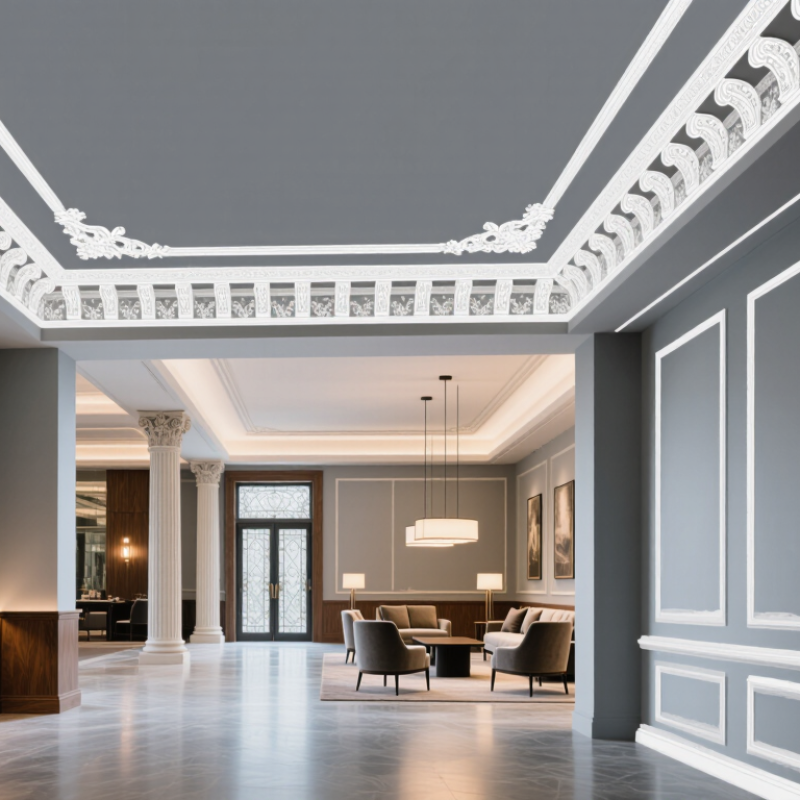
Common forms include crown moulding, skirting boards, wall panels, ceiling medallions, and door surrounds. Materials vary from solid wood and gypsum to polyurethane, PVC, and lightweight polymer composites. Each choice changes weight, moisture resistance, fire performance, and installation speed.

In practical projects, crown moulding softens the ceiling-to-wall junction. Skirting boards protect lower walls from shoes, vacuum cleaners, and damp mopping.

Wall mouldings can create measured panels around a dining table or corridor. Ceiling profiles may conceal uneven joints, wiring, or small construction defects.

They are useful, but not magic. Poorly aligned joints remain visible under strong lighting.

The 2024 China Construction Industry Development Report places China’s annual construction output above RMB 31 trillion in 2023. This scale supports extensive domestic capacity for cutting, coating, moulding, and export packaging. However, volume should not replace verification.

Buyers should check dimensional tolerance, substrate density, coating adhesion, moisture behavior, and test documentation. UNEP’s 2023 Global Status Report for Buildings and Construction states that buildings consumed about 30% of global energy and produced around 26% of energy-related emissions.

Lightweight profiles can reduce transport impacts, but only when they remain durable and repairable. Some decorative products look refined in catalogues, yet their corners chip during installation. Sample testing matters.

Sources: China Construction Industry Development Report 2024; UNEP Global Status Report for Buildings and Construction 2023.
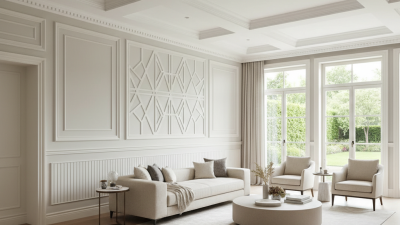
Why Choose Decorative Moulding Manufacturers in China?

China’s decorative moulding manufacturers attract buyers through broad production experience and flexible customization. Many factories can develop ceiling mouldings, wall panels, trim, and architectural profiles from drawings or physical samples. Their production teams often understand material behavior, surface preparation, tooling, and repeat-order consistency.

The practical advantage is cost control. Established manufacturers may combine moulding, cutting, coating, and packing in one facility. This can reduce handling between suppliers and shorten communication loops. Buyers can request samples with different textures, paint colors, edge details, and fire-performance requirements.

Small details matter. A clean corner can change the appearance of an entire room.

However, choosing a Chinese supplier requires more than comparing quotations. A reliable manufacturer should provide clear material specifications, inspection records, production photos, and realistic lead times. Ask how profiles are protected inside cartons. Check whether the finished surface resists cracking, moisture, and ordinary installation pressure. Independent sample testing is wise when projects involve public spaces or strict building requirements.

That advantage is not automatic.

Some suppliers explain well but document poorly. Others offer attractive samples that do not match later batches. I have learned that written tolerances, approved samples, and staged inspections prevent avoidable disputes. Factory communication can also take patience, especially when drawings lack measurements or installation details. China offers strong manufacturing depth, but careful verification remains the buyer’s responsibility.

Key Types of Decorative Mouldings Made in China

China Top Decorative Moulding Manufacturers?

Decorative moulding manufacturers in China produce several practical profile types for residential and commercial interiors. Polyurethane mouldings are lightweight, moisture-resistant, and easy to cut on site. They suit ceiling borders, wall frames, and imitation wood details. PVC mouldings offer consistent dimensions and simple cleaning. They work well in kitchens, bathrooms, and other humid spaces.

Expanded polystyrene, or EPS, is widely used for large ceiling cornices and exterior decorative shapes. It reduces installation weight, but its surface needs careful coating and reinforcement. Wood and MDF mouldings provide warmer textures for doors, cabinets, and wall panels. Solid wood gives natural grain, while MDF offers smoother machining and more stable pricing. WPC profiles are another option for areas needing improved moisture resistance.

Material choice should follow the project conditions, not only the catalogue photograph. Check density, dimensional tolerance, surface finish, adhesive compatibility, and fire-performance documents. Ask for samples before confirming bulk production. A profile that looks sharp in a showroom may show joints under strong lighting. This is often overlooked. Manufacturers with reliable quality systems normally provide clear inspection records, packaging details, and production samples. Requirements also vary by building code and destination market, so certificates should be verified for the actual application.

China Top Decorative Moulding Manufacturers? Key Types of Decorative Mouldings Made in China

Representative material densities of commonly manufactured decorative moulding types

China produces decorative mouldings in a wide range of materials, including polyurethane, polystyrene, PVC, MDF, and wood. The figures shown are representative material-density values in kilograms per cubic metre and are intended for general product comparison rather than company-specific evaluation. Actual density varies by formulation, grade, moisture content, and manufacturing process.

How to Evaluate China’s Top Decorative Moulding Manufacturers

China Top Decorative Moulding Manufacturers?

Evaluating China’s top decorative moulding manufacturers starts with evidence, not attractive catalog images. Ask about production history, material sources, and quality controls. A factory visit can reveal storage conditions, dust control, and worker training. These details matter. Check whether wood, polymer, or composite materials match your project’s moisture and fire requirements. Request recent inspection records, not generic certificates.

Order samples before discussing large quantities. Measure profile dimensions, edge sharpness, surface smoothness, and color consistency. Examine joints and corners under natural light. Test the moulding after cutting, sanding, painting, and installation. A reliable manufacturer should explain acceptable tolerances clearly. Packaging also deserves attention. Long profiles need strong corner protection and moisture-resistant wrapping. Small damage can create expensive site delays.

Communication often separates capable suppliers from merely cheap ones. Confirm tooling ownership, revision procedures, production capacity, and realistic lead times. Ask how complaints are recorded and corrected. Clear answers build trust. Vague promises do not. Independent laboratory testing may be sensible for demanding projects. However, no scorecard is perfect. Buyers can overvalue price, factory size, or polished presentations. A smaller workshop may offer better technical attention, but its capacity could be limited. Evaluate documented performance, sample results, and communication together before making a decision.

What to Consider Before Placing a Custom Moulding Order

China Top Decorative Moulding Manufacturers?

What to Consider Before Placing a Custom Moulding Order

Choosing a decorative moulding manufacturer requires more than comparing catalog prices. Ask how the factory handles drawings, material selection, tooling, and quality inspections. A reliable supplier should explain each stage clearly, not hide behind vague promises. Request recent production samples and check their edges, profiles, surface texture, and dimensional accuracy under strong light.

Send a complete technical file before requesting a quotation. Include profile dimensions, length tolerance, material type, color reference, finish, packaging method, and expected quantity. Even a small measurement error can create visible gaps during installation. Confirm whether the quoted price includes tooling, sample development, revisions, and export packaging. These costs are often separated.

Check production capacity and quality controls carefully. Ask for a sample approval process, inspection records, and a realistic lead time. A video call through the workshop can reveal storage conditions, equipment, and how finished pieces are protected. Custom orders also need clear terms for damaged goods, color variation, replacements, and payment milestones. Get everything in writing.

Do not trust polished photos alone.

During one project, I focused too heavily on the profile design and overlooked packaging strength. Several corners arrived marked, despite excellent moulding quality. That mistake changed my process. I now test a packed sample, inspect the first production batch, and leave time for corrections. A cheaper quote may become expensive when installation delays, rework, or inconsistent finishes appear.

China Top Decorative Moulding Manufacturers? - What to Consider Before Placing a Custom Moulding Order

Evaluation Dimension Typical Industry Reference What to Confirm Before Ordering Why It Matters
Material Selection Common decorative moulding materials include polyurethane, polystyrene, PVC, MDF, wood, and composite materials. Request the material specification, density or grade, moisture resistance, fire performance, and intended installation environment. Material choice affects weight, machining, paint adhesion, durability, cost, and suitability for interior or humid applications.
Profile and Design Complexity Straight profiles are generally simpler to produce than curved, layered, deeply embossed, or highly detailed designs. Provide dimensioned drawings or 3D CAD files showing profile height, width, length, corner details, and allowable variations. Complex geometry can increase tooling requirements, production time, material waste, and inspection difficulty.
Dimensional Tolerance Tolerance depends on the material, process, profile size, and measurement method; tighter tolerances normally increase cost. Define critical dimensions, acceptable length and profile variation, straightness, squareness, and the inspection method. Clear tolerances help prevent installation gaps, misaligned joints, and disputes over acceptable product variation.
Tooling and Setup Charges Custom moulds, dies, cutting fixtures, or CNC programs may be required for a new profile. Confirm tooling ownership, tooling life, revision charges, storage terms, maintenance responsibility, and whether the fee is refundable or amortized. Tooling terms affect total landed cost and determine how easily the design can be modified later.
Minimum Order Quantity Minimum quantities vary by material, production method, profile complexity, and whether custom tooling is needed. Ask for the minimum quantity per profile, color, finish, size, and shipment, including any sample-order option. A low initial quantity may carry higher unit costs, while excess inventory can increase storage and handling costs.
Prototype and Sample Approval A physical sample or approved digital prototype is commonly used to verify shape, finish, color, and installation fit. Confirm sample cost, sample lead time, revision limits, approval documentation, and whether mass production must match the approved sample. Formal approval reduces the risk of producing a large quantity with an incorrect profile or finish.
Surface Finish and Color Options may include raw, primed, painted, laminated, coated, wood-grain, or textured surfaces. Specify color references, gloss level, texture, coating type, touch-up requirements, and acceptable color variation between batches. Lighting, substrate variation, and batch differences can affect the appearance of decorative moulding after installation.
Production Lead Time The schedule generally includes engineering, tooling, sampling, production, inspection, and packing; custom orders require more time than standard stock. Obtain a milestone schedule and identify the start date, sample approval deadline, production window, inspection date, and dispatch date. A detailed schedule makes it easier to coordinate construction, installation crews, and downstream shipping.
Quality Control Process Quality checks may cover dimensions, surface defects, color consistency, packaging condition, and quantity. Request the inspection checklist, sampling method, inspection records, defect classification, and procedure for handling nonconforming goods. Documented controls provide objective evidence that the shipment meets the approved specification.
Packaging and Protection Long and lightweight mouldings can be vulnerable to bending, impact, moisture, and surface abrasion during transport. Specify inner protection, edge guards, carton strength, palletization, moisture protection, labeling, and maximum package length. Proper packaging lowers the risk of broken corners, scratches, deformation, and costly replacement shipments.
Shipping and Trade Terms International orders may use trade terms such as EXW, FOB, CIF, or DDP, depending on the agreed logistics arrangement. Confirm the exact Incoterm, export documentation, freight responsibility, insurance, destination charges, and customs requirements. The quoted product price may not represent the final landed cost at the delivery address.
Compliance and Safety Documentation Requirements depend on the destination market, building application, material composition, and intended use. Identify applicable fire, chemical, environmental, packaging, and building-product requirements before production begins. Missing or unsuitable documentation can delay customs clearance, project approval, or commercial use.
Installation Compatibility Installation methods vary by substrate and material and may involve adhesive, nails, screws, clips, joints, or a combination of methods. Confirm recommended adhesive, fixing method, cutting tools, joint treatment, expansion allowance, and surface preparation. A suitable product can still fail if the fixing system or installation conditions are not appropriate.
Payment and Order Protection Custom orders often require a deposit before tooling or production, with the balance linked to agreed milestones. Document payment stages, change-order terms, cancellation rules, inspection rights, warranty coverage, and remedies for defects or delays. Written commercial terms reduce misunderstandings and clarify responsibilities throughout the order cycle.
After-Sales Support Support may include replacement procedures, technical installation guidance, spare samples, and assistance with future repeat orders. Confirm response times, warranty duration, evidence required for claims, replacement responsibility, and retention of approved specifications. Reliable support is especially important when mouldings are installed in phases or reordered for multiple projects.

Note: The references above are general purchasing considerations for custom decorative moulding. Final specifications, tolerances, lead times, compliance requirements, and commercial terms should be confirmed in the approved quotation and purchase contract.