How to Choose the Right Decorative Moulding for Your Home?
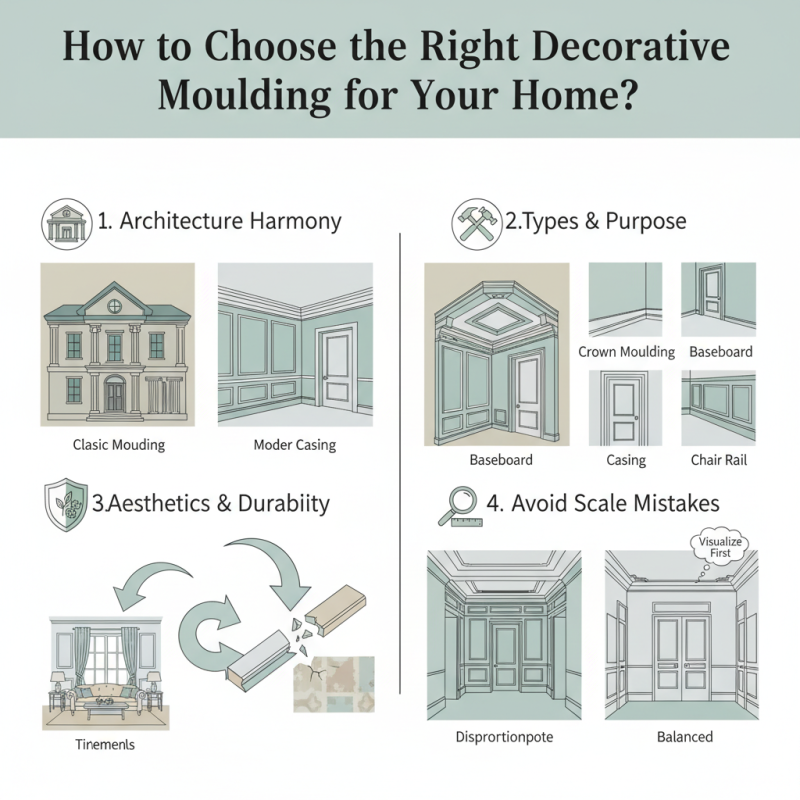
Choosing the right decorative moulding can transform a space dramatically. John Hartman, a renowned expert in home design, once stated, "The right moulding adds personality and depth to any room." When selecting decorative moulding, consider the architecture of your home. Different styles can either complement or clash with existing features.
The variety of options available can be overwhelming. From crown moulding to baseboards, each type serves a purpose. It's essential to find a balance between aesthetic appeal and functionality. Choose moulding that will stand the test of time, both in style and durability.
However, common mistakes can arise. Misjudging the scale of moulding can dwarf a room or feel disproportionate. Always visualize how decorative moulding interacts with your space before making a final choice. Embracing this thoughtful approach can enhance your home's charm significantly.
Understanding Different Types of Decorative Moulding: Profiles and Styles
When selecting decorative moulding for your home, it’s essential to understand the various profiles and styles available. Crown moulding adds elegance to ceilings. It creates a seamless transition between the wall and the ceiling. Consider the height of your ceilings when choosing the size of crown moulding. A larger profile suits tall ceilings but can overwhelm smaller spaces.
Chair rails offer a unique way to divide wall colors or materials. They can enhance the room’s character. Different styles of chair rails come in simple, sleek profiles or more ornate carvings. Baseboards also play a significant role in a room’s aesthetic. Taller baseboards can make a space feel grander, while slim designs lend a modern touch.
Reflect on how each style fits your home. A rustic cabin might benefit from natural wood finishes, while a minimalist space may need simpler lines. Take time to visualize your choices. Rushing through can lead to regret later. Personal preferences vary greatly, so ensure that the moulding reflects your unique taste and fits your home's overall design story.
Key Materials for Decorative Moulding: Wood, PVC, and Composite Options
When selecting decorative moulding, material choices significantly impact the final look.
Wood remains a classic favorite. It offers natural beauty and warmth.
You can choose from various species. Pine is affordable, while oak provides durability.
However, wood can warp or crack over time. This means considering your local climate is vital.
PVC is another popular option. It's lightweight and resistant to moisture. Ideal for areas with high humidity, like bathrooms.
PVC mouldings come in many styles and finishes. They require less maintenance than wood. Still, some feel PVC lacks the authentic touch of real wood.
The aesthetic preference is crucial here.
Composite mouldings blend wood fibers and polymers. This material boasts the benefits of both wood and PVC.
They're often more eco-friendly and can be very durable. Yet, the color range may not match everyone's vision.
Each material presents unique strengths and weaknesses. Reflecting on these will guide you to the right choice for your home.
Assessing Room Dimensions and Style for Moulding Selection
When selecting decorative moulding, assessing room dimensions is crucial. According to the National Association of Home Builders, proper scale enhances a room's character. For smaller rooms, choose thinner moulding. It offers elegance without overwhelming the space. Wider mouldings are ideal for larger rooms, contributing to a more balanced look.
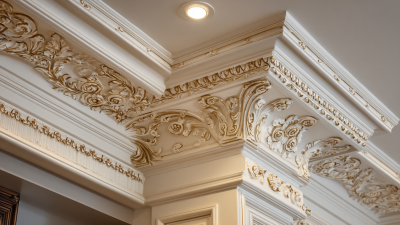
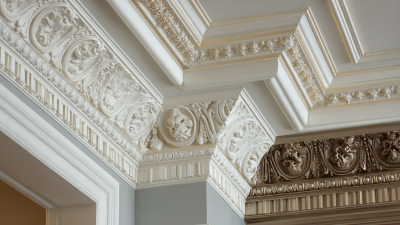
Style also plays a vital role in moulding selection. Modern spaces often favor sleek, minimal designs. In contrast, traditional rooms may benefit from ornate profiles. A report by the American Institute of Architects suggests that decorative moulding can impact perceived room value. A mismatch can detract from the overall appeal. It’s essential to reflect on personal style and the home's architecture to find harmony.
Consider textures and colors as well. A matte finish can create a subtle aesthetic, while glossy can add drama. The right choice enhances the room’s mood. However, it requires thoughtful consideration. It’s easy to overlook how the finish interacts with lighting. The interplay between shadows and highlights can alter perceptions dramatically. Reflecting on these aspects leads to better, more informed selections.
How to Choose the Right Decorative Moulding for Your Home?
| Room Type |
Recommended Moulding Style |
Height (inches) |
Color/Finish |
Material |
| Living Room |
Crown Moulding |
8-10 |
White |
Wood |
| Bedroom |
Bay Window Moulding |
4-6 |
Soft Cream |
MDF |
| Kitchen |
Chair Rail |
3-4 |
Natural Oak |
Vinyl |
| Bathroom |
Baseboard Moulding |
6-8 |
High Gloss White |
PVC |
| Hallway |
Picture Rail |
6-10 |
Pastel Blue |
Polystyrene |
The Impact of Moulding on Home Value: Industry Insights and Statistics
Decorative moulding is more than just an aesthetic feature in homes. It can significantly influence a property’s value. Buyers often seek homes that exhibit quality craftsmanship. The right moulding can enhance the perceived value of your space. Reports suggest that homes with well-chosen moulding can see a return on investment upward of 7%. However, the specific impact may vary based on location and design trends.
Industry insights illustrate the growing popularity of decorative moulding in modern interior design. Simple crown moulding can make ceilings appear higher. Baseboards can add sophistication to any room. Yet, not all moulding fits every style. Some may find certain mouldings clash with their home’s character. This misalignment could lead to a negative impression. Research on market preferences indicates that buyers appreciate cohesive design.
Balancing personal taste with mainstream appeal is crucial. Investing too heavily in trendy designs may backfire. Timeless choices usually yield better returns. Consider consulting with design professionals to make informed decisions. They can help navigate the complexities of current trends versus classic styles. Ultimately, moulding choices should reflect both individual style and market demand.
DIY vs. Professional Installation: Cost Analysis and Considerations
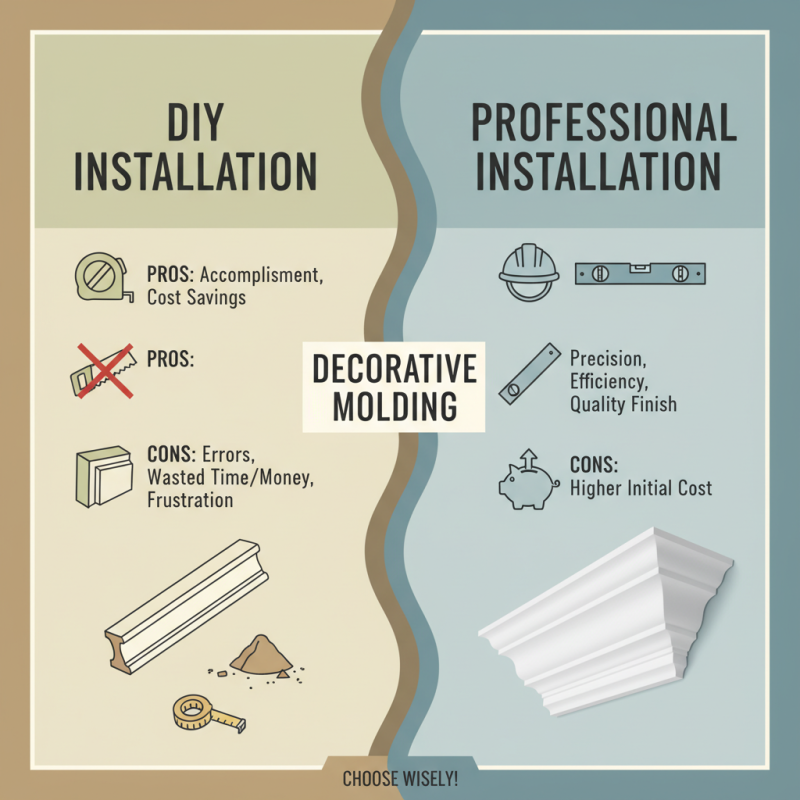
When considering decorative moulding, the decision between DIY and professional installation often arises. DIY can seem appealing. It offers a sense of accomplishment. Yet, it carries risks. You may miscalculate measurements or choose the wrong materials. Mistakes can lead to wasted money and time. Imagine cutting a length too short or choosing the wrong finish. These issues can frustrate even seasoned DIY enthusiasts.
On the other hand, hiring a professional comes with its own price tag. Labor costs can add up quickly. You may need to budget for both materials and installation. Professionals bring experience and tools. They can complete the work efficiently and can often spot potential issues before they arise. However, not every job requires expert hands. Assess the complexity of your project. If it’s a simple task, trying it yourself might work well. Yet, if you want intricate details or a perfect fit, consider getting help. Balancing cost and quality is key in this decision.