Best Wall Siding Options for Your Home in 2023
As homeowners seek to enhance the aesthetic appeal and durability of their residences, the selection of wall siding has become a pivotal consideration in home design. In 2023, the variety of wall siding options available presents both opportunities and challenges for those looking to upgrade their exteriors. From traditional materials that offer timeless elegance to modern innovations that boast energy efficiency and sustainability, the choice of wall siding can significantly influence the overall appearance and functionality of a home.
This comprehensive guide aims to explore the best wall siding options currently trending in the market. Homeowners will find valuable insights into the advantages and disadvantages of each material, helping them make informed decisions that align with their style preferences, budget constraints, and long-term maintenance goals. Whether you are constructing a new home or renovating an existing structure, understanding the latest options in wall siding will empower you to create a space that not only reflects your unique taste but also stands the test of time.
Types of Wall Siding Materials Available in 2023
When selecting wall siding for your home in 2023, it's crucial to understand the variety of materials available, each offering unique benefits and aesthetic appeal. The most popular options include vinyl, wood, fiber cement, and metal siding. According to the 2023 Remodeling Impact Report by the National Association of Realtors, vinyl siding continues to be favored for its affordability and low maintenance requirements, representing about 26% of all siding installations. This material provides a wide range of colors and styles, making it suitable for various architectural designs.
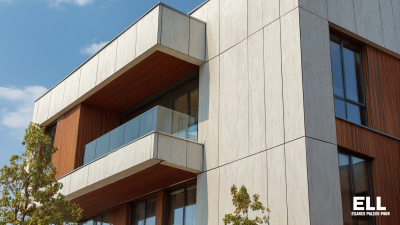
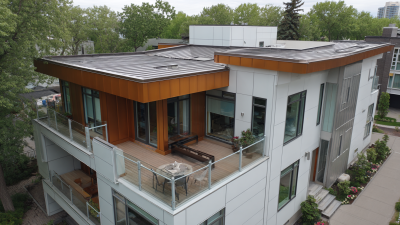
Wood siding, while traditional, remains a go-to for many homeowners due to its natural beauty and versatility. However, it's essential to consider the maintenance involved, as wood siding may require regular painting or staining to prevent rot and damage from pests. Meanwhile, fiber cement siding is gaining traction, with a growth rate of approximately 14% over the last five years, as reported by the Portland Cement Association. Known for its durability and resistance to harsh weather conditions, fiber cement is an excellent choice for homeowners seeking a long-term investment in their property. Lastly, metal siding, particularly in aluminum and steel, appeals for its modern appearance and longevity, with investments here often recouping around 85% upon resale according to industry studies. Each of these materials provides distinct advantages, allowing homeowners to tailor their choices to match aesthetic preferences and practical needs.
Best Wall Siding Options for Your Home in 2023
| Siding Type |
Material |
Durability |
Maintenance |
Cost Range |
| Vinyl Siding |
PVC |
15-40 years |
Low |
$2-$7 per sq ft |
| Wood Siding |
Cedar, Pine |
20-30 years |
Medium |
$4-$9 per sq ft |
| Fiber Cement Siding |
Cement, Sand, Cellulose |
50+ years |
Medium |
$5-$10 per sq ft |
| Stucco Siding |
Cement, Sand |
50+ years |
High |
$6-$9 per sq ft |
| Brick Siding |
Clay |
100+ years |
Low |
$8-$12 per sq ft |
Benefits and Drawbacks of Popular Siding Options
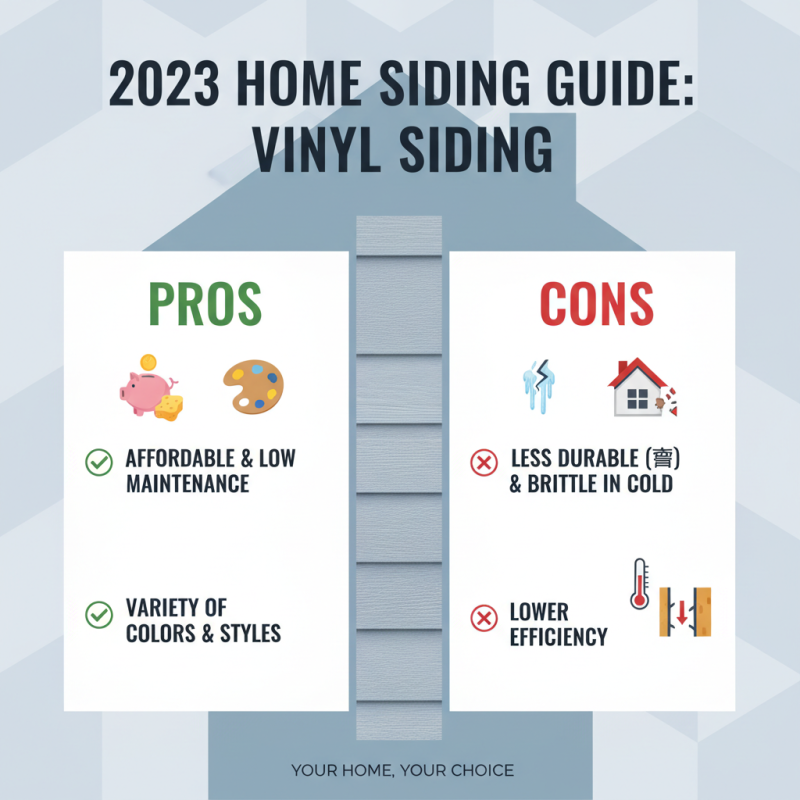
When selecting wall siding for your home in 2023, it's essential to weigh the benefits and drawbacks of various materials. Vinyl siding, for instance, is popular due to its affordability and low maintenance needs. It comes in a range of colors and styles but may not last as long as some other materials. On the downside, vinyl can become brittle in cold temperatures and may not provide the same insulation as wood or fiber cement siding, making it less energy-efficient.
Wood siding offers a classic and aesthetic appeal that many homeowners cherish. Its natural texture and warmth can enhance curb appeal, but it requires regular maintenance, such as painting or staining, to prevent rotting and insect damage. Alternatively, fiber cement siding combines the durability of wood and the low maintenance of vinyl. While it might be more expensive upfront, it offers increased resistance to fire, pests, and decay.
**Tips:** When choosing siding, consider your local climate and how it impacts each material's performance. It's also beneficial to consult local building codes regarding siding installations. Lastly, think about your long-term plans; choosing a material that complements your home’s style can enhance your investment when it comes time to sell.
Factors to Consider When Choosing Wall Siding
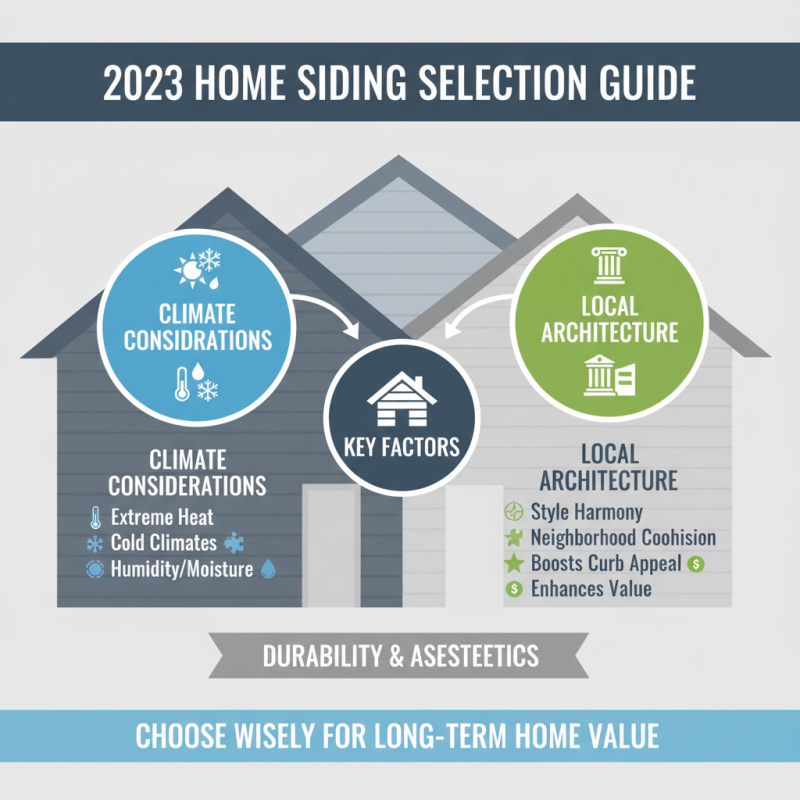
When it comes to selecting wall siding for your home in 2023, several factors come into play. The climate in your area should be a primary consideration. Different siding materials perform better under specific weather conditions, such as extreme heat, cold, or humidity. Furthermore, consider the local architecture and how your siding choice will harmonize with the surrounding environment. This cohesion can enhance your home's curb appeal and overall value.
Tips: Before making a decision, research materials that offer durability and low maintenance for your specific climate. For instance, if you live in a region prone to heavy rain, look for moisture-resistant options. Additionally, think about your long-term goals. Are you planning to stay in your home for a significant time, or is this a temporary residence? Your siding choice should reflect your investment strategy.
Another important aspect is energy efficiency. Choosing insulated siding can help maintain your home’s temperature, ultimately reducing your energy bills. Also, assess the installation requirements and costs associated with different materials. A simpler installation process can save you time and money, making it a worthwhile factor to evaluate alongside aesthetics and functionality.
Cost Comparison of Different Wall Siding Materials
When selecting wall siding for your home in 2023, understanding the cost implications of different materials is crucial. According to a report from the Remodeling 2022 Cost vs. Value study, homeowners can expect to pay between $5,000 and $15,000 for siding installation, depending largely on the material.
Vinyl siding remains one of the most affordable options, averaging about $3 to $8 per square foot, making it a popular choice among budget-conscious homeowners. In contrast, natural wood siding can cost anywhere from $6 to $12 per square foot, along with additional maintenance expenses over time, given its susceptibility to weather damage and pests.
Fiber cement siding is another contender, often priced between $5 and $10 per square foot. While its upfront cost may increase, its durability and resistance to rot and termites can lead to long-term savings.
A study by the National Association of Home Builders highlights that fiber cement siding not only boosts curb appeal but also provides a return on investment around 70% upon resale. Additionally, insulated vinyl siding, although more expensive initially, can offer energy efficiency benefits that lower utility bills and enhance overall comfort in the home, showcasing how material selection can impact both short-term costs and long-term advantages.
Maintenance Requirements for Various Siding Choices
When selecting wall siding options for your home, understanding the maintenance requirements of various materials is essential. For instance, wood siding, while aesthetically pleasing, demands regular upkeep to prevent rot and insect damage. Homeowners should plan for annual painting or staining, along with periodic inspections to address any signs of wear. Additionally, ensuring proper sealing can significantly extend the life of wood siding, although this requires diligence and effort.
On the other hand, vinyl siding presents a low-maintenance alternative that appeals to many. It typically only requires occasional cleaning with soap and water, making it a hassle-free choice for busy homeowners. However, it’s important to check for any cracks or discoloration, which can indicate underlying issues or age. Meanwhile, fiber cement siding offers a balance of durability and relatively low maintenance, requiring painting every 10 to 15 years to maintain its appearance. Regular inspection for mildew and proper sealing around joints will keep it in good shape. Each material comes with its own set of maintenance needs, so considering these factors is crucial when making the best choice for your home.